Sponsored
Sponsored
Free Edition
Verified Content
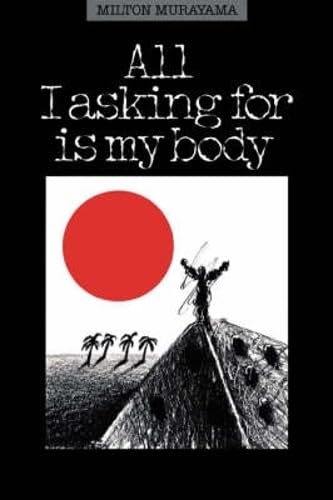
All I Asking for Is My Body
Overview
From the Afterword by Franklin S. Odo:
The most important feature of Milton Murayama's brilliant All I Asking for Is My Body is the quality of the storytelling. It deserves thorough discussion and criticism among literary professionals and students. The work has a further genius, however, in its evocation of several major topics in modern Hawaiian history, specifically during the 1930s, the decade before United States involvement in World War II. I suggest that Murayama’s novel provides us with valuable insights into the worlds of language, sugar plantation history, and the second-generation Japanese Americans, the nisei. . . . Critic Rob Wilson noted: “Part of the accomplishment of the novel is that the language ranges from the vernacular to the literate and standard, and so reflects the cultural and linguistic diversity of Hawaii.” In the novel, Murayama uses standard English and pidgin. In real life, the narrator Kiyo explains, “we spoke four languages: good English in school, pidgin English among ourselves, good or pidgin Japanese to our parents and the other old folks.” The wonder is that Murayama emerged using any one of the languages well. For most, that experience proved to be an insuperable barrier to good creative writing. . . . All I Asking for Is My Body is the most compelling work done on the Hawaii nisei experience. Murayama understood his theme to be “the Japanese family system vs. individualism, the plantation system vs. individualism. And so the environments of the family and the plantation are inseparable from the theme.” Fortunately for us as readers, however, he understood that the story was the key ingredient; that anything less would simply add to the sociological study of the plantation and the Japanese family in Hawaii.
The most important feature of Milton Murayama's brilliant All I Asking for Is My Body is the quality of the storytelling. It deserves thorough discussion and criticism among literary professionals and students. The work has a further genius, however, in its evocation of several major topics in modern Hawaiian history, specifically during the 1930s, the decade before United States involvement in World War II. I suggest that Murayama’s novel provides us with valuable insights into the worlds of language, sugar plantation history, and the second-generation Japanese Americans, the nisei. . . . Critic Rob Wilson noted: “Part of the accomplishment of the novel is that the language ranges from the vernacular to the literate and standard, and so reflects the cultural and linguistic diversity of Hawaii.” In the novel, Murayama uses standard English and pidgin. In real life, the narrator Kiyo explains, “we spoke four languages: good English in school, pidgin English among ourselves, good or pidgin Japanese to our parents and the other old folks.” The wonder is that Murayama emerged using any one of the languages well. For most, that experience proved to be an insuperable barrier to good creative writing. . . . All I Asking for Is My Body is the most compelling work done on the Hawaii nisei experience. Murayama understood his theme to be “the Japanese family system vs. individualism, the plantation system vs. individualism. And so the environments of the family and the plantation are inseparable from the theme.” Fortunately for us as readers, however, he understood that the story was the key ingredient; that anything less would simply add to the sociological study of the plantation and the Japanese family in Hawaii.
Finding high-quality digital editions shouldn't be a challenge. With instant access to our curated library, you can start your journey with Aftermath immediately. Whether on your phone, tablet, or e-reader, the story of Raleigh's life is presented in a format designed for modern readers.
To get started finding All I Asking for Is My Body, you are right to find our website which has a comprehensive collection of titles listed. Our library is one of the most comprehensive resources for free digital reading materials, providing verified and safe content for book lovers worldwide.


36,114 currently reading


152,889 want to read
Sponsored
Sponsored
Book details & editions
| ISBN | 0824811720 |
| Publisher | N/A |
| Publication date | September 1988 |
| Language | English |
| Pages | pages |
| Reading Options | PDF · EPUB · Mobi |
Sponsored
Sponsored




Ratings & Reviews
5 ★
81.4%
4 ★
14.6%
3 ★
3%
2 ★
0.6%
1 ★
0.4%
4.76
BlueReads Choice
Sponsored
Write a Review
Community Reviews
Sort by: