Sponsored
Sponsored
Free Edition
Verified Content
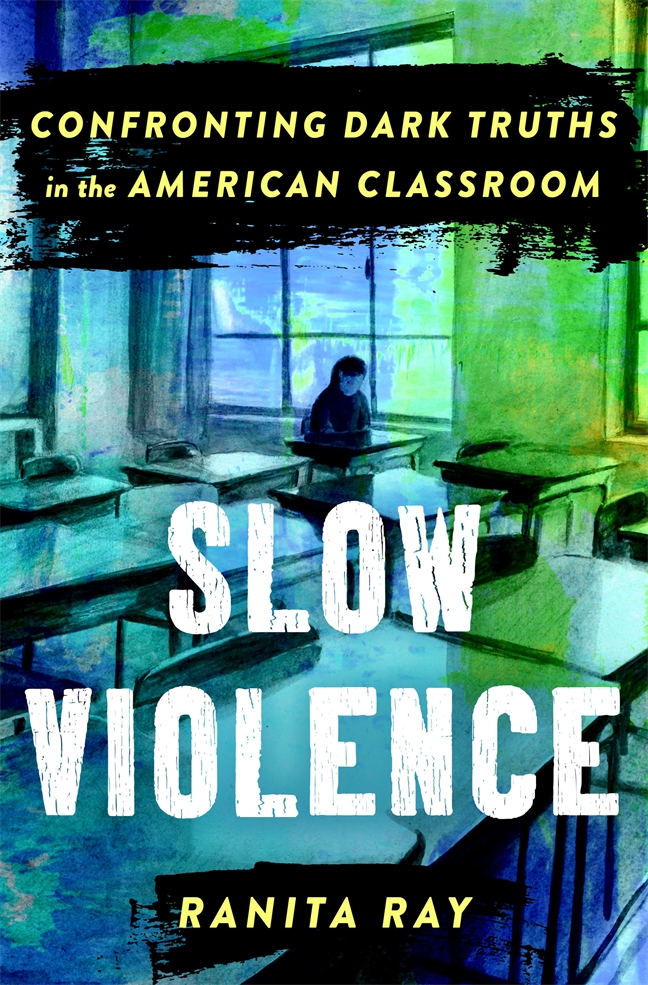
Slow Violence: Confronting Dark Truths in the American Classroom
Overview
A powerful exposé of the American public education system's indifference toward marginalized children and the "slow violence" that fashions schools into hostile work and learning environments.
In 2017, sociologist Ranita Ray stepped inside a fourth-grade classroom in one of the nation’s largest majority-minority districts in Las Vegas, Nevada. She was there to conduct research on the lack of resources and budget cuts that regularly face public schools. However, a few months into her immersion, a disturbed Ray recognized that that greatest impediment to students was the “slow violence” that preys on their minds, bodies, and spirits at the hands of teachers and administrators who are charged with their care.
Slow Violence lays bare the routine indifference, racism, and verbal and emotional abuse and harassment that teachers and administrators perpetrate routinely against the most vulnerable children in our schools. We meet Nazli, a bright, funny Black girl, and math wiz, who loses her baby brother, and is told that “grit” will enable her to rise above her grief. Reggie is a devoted student and curious scholar, but his path to success is derailed when teachers fashion him as a predator after they find him looking at two inappropriate photos on his iPad. There’s Nalin, a shy and determined Filipina who has just arrived in the US, but is ignored based on her educator’s assumption that “Asians” are “good at math.” Her entire journey through school is darkened by this stereotype. And there’s Miguel, a sharp, distracted Latino boy who can’t overcome his teachers’ urge to incorrectly diagnose him with autism.
Bolstered by an empathetic and passionate voice as well as the latest breaking research in the social sciences, Ray goes beyond timeworn discussions about the school-to-prison pipeline, funding, and achievement gaps to directly address what happens behind the closed doors of classrooms, introducing a compelling—and crucial—new perspective into the conversation about our education system.
In the warm, luminous spirit of character-driven books like Invisible Child, Slow Violence allows us to see that the way we’ve tried to make a start in education reform is wrong. To forge new approaches that foster young minds and flourishing generations we have to start with how children experience the classroom. Unflinchingly, Slow Violence tells us—and shows us where to begin.
In 2017, sociologist Ranita Ray stepped inside a fourth-grade classroom in one of the nation’s largest majority-minority districts in Las Vegas, Nevada. She was there to conduct research on the lack of resources and budget cuts that regularly face public schools. However, a few months into her immersion, a disturbed Ray recognized that that greatest impediment to students was the “slow violence” that preys on their minds, bodies, and spirits at the hands of teachers and administrators who are charged with their care.
Slow Violence lays bare the routine indifference, racism, and verbal and emotional abuse and harassment that teachers and administrators perpetrate routinely against the most vulnerable children in our schools. We meet Nazli, a bright, funny Black girl, and math wiz, who loses her baby brother, and is told that “grit” will enable her to rise above her grief. Reggie is a devoted student and curious scholar, but his path to success is derailed when teachers fashion him as a predator after they find him looking at two inappropriate photos on his iPad. There’s Nalin, a shy and determined Filipina who has just arrived in the US, but is ignored based on her educator’s assumption that “Asians” are “good at math.” Her entire journey through school is darkened by this stereotype. And there’s Miguel, a sharp, distracted Latino boy who can’t overcome his teachers’ urge to incorrectly diagnose him with autism.
Bolstered by an empathetic and passionate voice as well as the latest breaking research in the social sciences, Ray goes beyond timeworn discussions about the school-to-prison pipeline, funding, and achievement gaps to directly address what happens behind the closed doors of classrooms, introducing a compelling—and crucial—new perspective into the conversation about our education system.
In the warm, luminous spirit of character-driven books like Invisible Child, Slow Violence allows us to see that the way we’ve tried to make a start in education reform is wrong. To forge new approaches that foster young minds and flourishing generations we have to start with how children experience the classroom. Unflinchingly, Slow Violence tells us—and shows us where to begin.
Finding high-quality digital editions shouldn't be a challenge. With instant access to our curated library, you can start your journey with Aftermath immediately. Whether on your phone, tablet, or e-reader, the story of Raleigh's life is presented in a format designed for modern readers.
To get started finding Slow Violence: Confronting Dark Truths in the American Classroom, you are right to find our website which has a comprehensive collection of titles listed. Our library is one of the most comprehensive resources for free digital reading materials, providing verified and safe content for book lovers worldwide.


36,114 currently reading


152,889 want to read
Sponsored
Sponsored
Book details & editions
| ISBN | 1250288304 |
| Publisher | N/A |
| Publication date | N/A |
| Language | English |
| Pages | pages |
| Reading Options | PDF · EPUB · Mobi |
Sponsored
Sponsored



Ratings & Reviews
5 ★
81.4%
4 ★
14.6%
3 ★
3%
2 ★
0.6%
1 ★
0.4%
4.76
BlueReads Choice
Sponsored
Write a Review
Community Reviews
Sort by: