Sponsored
Sponsored
Free Edition
Verified Content
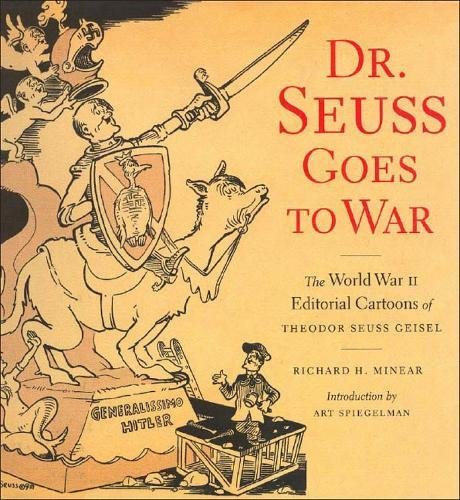
Dr. Seuss Goes to War: The World War II Editorial Cartoons of Theodor Seuss Geisel
Overview
Drawing Conclusions
Well before Sam ever considered eating green eggs and ham or Horton heard a who, Dr. Seuss was drawing biting cartoons for adults that expressed his fierce opposition to anti-Semitism and fascism. An editorial cartoonist from 1941 to 1943 for PM magazine, a left-wing daily New York newspaper, Dr. Seuss launched a battle against dictatorial rule abroad and America First (an isolationist organization that argued against U.S. entry into World War II) with more than 400 cartoons urging the United States to fight against Adolf Hitler and his cohorts in fascism, Benito Mussolini, Pierre Laval, and Japan (he never depicted General Tojo Hideki, the wartime prime minister, or Togo Shigenori, the foreign minister). Dr. Seuss Goes to War, by Richard H. Minear, includes 200 of these cartoons, demonstrating the active role Dr. Seuss played in shaping and reflecting how America responded to World War II as events unfolded.
As one of America's leading historians of Japan during World War II, Minear also offers insightful commentary on the historical and political significance of this immense body of work that, until now, has not been seriously considered as part of Dr. Seuss's extraordinary legacy.
Born to a German-American family in Springfield, Massachusetts, in 1904, Theodor Geisel began his cartooning career at Dartmouth College, where he contributed to the humor magazine. After a run-in with college authorities for bootlegging liquor, he had to use a pseudonym to get his work published, choosing his middle name, Seuss, and adding "Dr." several years later when he dropped out of graduate school at Oxford University in England. He had never planned on setting poison political pen to paper until he realized his deep hatred of Italian fascism. The first editorial cartoon he drew depicts the editor of the fascist paper Il Giornale d'Italia wearing a fez (part of Italy's fascist uniform) and banging away at a giant steam typewriter while a winged Mussolini holds up the free end of the banner of paper emerging from the roll. He submitted it to a friend at PM, an outspoken political magazine that was "against people who push other people around," and began his two-year career with the magazine before joining the U.S. Army as a documentary filmmaker in 1943.
Dr. Seuss's first caricature of Hitler appears in the May 1941 cartoon, "The head eats, the rest gets milked," portraying the dictator as the proprietor of "Consolidated World Dairy," merging 11 conquered nations into one cow. Hitler went on to become one of the main caricatures in Seuss's work for the next two years, depicted alone, among his generals and other Germans, and with his allies Benito Mussolini and Pierre Laval. He is also drawn alongside "Japan," which Dr. Seuss portrays quite offensively, with slanted, bespectacled eyes and a sneering grin. While Dr. Seuss was outspoken against antiblack racism in the United States, he held a virulent disdain for the Japanese and rendered sinister and, at times, slanderous caricatures of their wartime actions even before the bombing of Pearl Harbor. But Dr. Seuss's aggression wasn't solely reserved for the fascists abroad. He was also loudly critical of America's initial apathy toward the war, skewering isolationists like America First advocate Charles Lindbergh, the Chicago Tribune's Colonel Robert McCormick, Eleanor Medill Patterson of the Washington Times-Herald, and Joseph Patterson of the New York Daily News, whom he considered as evil as Hitler. He encouraged Americans to buy war savings bonds and stamps and to do everything they could to ensure victory over fascism.
Minear provides historical background in Dr. Seuss Goes to War that not only serves to contextualize these cartoons but also deftly explains the highly problematic anti-Japanese and anticommunist stances held by both Dr. Seuss and PM magazine, which contradicted the leftist sentiments to which they both eagerly adhered. As Minear notes, Dr. Seuss eventually softened his feelings toward communism as Russia and the United States were united on the Allied front, but his stereotypical portrayals of Japanese and Japanese-Americans grew increasingly and undeniably racist as the war raged on, reflecting the troubling public opinion of American citizens. Minear does not attempt to ignore or redeem Dr. Seuss's hypocrisy; rather, he shows how these cartoons evoke the mood and the issues of the era.
After Dr. Seuss left PM magazine, he never drew another editorial cartoon, though we find in these cartoons the genesis of his later characters Yertle the dictating turtle and the Cat in the Hat, who bears a striking resemblance to Uncle Sam. Dr. Seuss Goes to War is an astonishing collection of work that many of his devoted fans have not been able to see until now. But this book is also a comprehensive, thoughtfully researched, and exciting histo...
Well before Sam ever considered eating green eggs and ham or Horton heard a who, Dr. Seuss was drawing biting cartoons for adults that expressed his fierce opposition to anti-Semitism and fascism. An editorial cartoonist from 1941 to 1943 for PM magazine, a left-wing daily New York newspaper, Dr. Seuss launched a battle against dictatorial rule abroad and America First (an isolationist organization that argued against U.S. entry into World War II) with more than 400 cartoons urging the United States to fight against Adolf Hitler and his cohorts in fascism, Benito Mussolini, Pierre Laval, and Japan (he never depicted General Tojo Hideki, the wartime prime minister, or Togo Shigenori, the foreign minister). Dr. Seuss Goes to War, by Richard H. Minear, includes 200 of these cartoons, demonstrating the active role Dr. Seuss played in shaping and reflecting how America responded to World War II as events unfolded.
As one of America's leading historians of Japan during World War II, Minear also offers insightful commentary on the historical and political significance of this immense body of work that, until now, has not been seriously considered as part of Dr. Seuss's extraordinary legacy.
Born to a German-American family in Springfield, Massachusetts, in 1904, Theodor Geisel began his cartooning career at Dartmouth College, where he contributed to the humor magazine. After a run-in with college authorities for bootlegging liquor, he had to use a pseudonym to get his work published, choosing his middle name, Seuss, and adding "Dr." several years later when he dropped out of graduate school at Oxford University in England. He had never planned on setting poison political pen to paper until he realized his deep hatred of Italian fascism. The first editorial cartoon he drew depicts the editor of the fascist paper Il Giornale d'Italia wearing a fez (part of Italy's fascist uniform) and banging away at a giant steam typewriter while a winged Mussolini holds up the free end of the banner of paper emerging from the roll. He submitted it to a friend at PM, an outspoken political magazine that was "against people who push other people around," and began his two-year career with the magazine before joining the U.S. Army as a documentary filmmaker in 1943.
Dr. Seuss's first caricature of Hitler appears in the May 1941 cartoon, "The head eats, the rest gets milked," portraying the dictator as the proprietor of "Consolidated World Dairy," merging 11 conquered nations into one cow. Hitler went on to become one of the main caricatures in Seuss's work for the next two years, depicted alone, among his generals and other Germans, and with his allies Benito Mussolini and Pierre Laval. He is also drawn alongside "Japan," which Dr. Seuss portrays quite offensively, with slanted, bespectacled eyes and a sneering grin. While Dr. Seuss was outspoken against antiblack racism in the United States, he held a virulent disdain for the Japanese and rendered sinister and, at times, slanderous caricatures of their wartime actions even before the bombing of Pearl Harbor. But Dr. Seuss's aggression wasn't solely reserved for the fascists abroad. He was also loudly critical of America's initial apathy toward the war, skewering isolationists like America First advocate Charles Lindbergh, the Chicago Tribune's Colonel Robert McCormick, Eleanor Medill Patterson of the Washington Times-Herald, and Joseph Patterson of the New York Daily News, whom he considered as evil as Hitler. He encouraged Americans to buy war savings bonds and stamps and to do everything they could to ensure victory over fascism.
Minear provides historical background in Dr. Seuss Goes to War that not only serves to contextualize these cartoons but also deftly explains the highly problematic anti-Japanese and anticommunist stances held by both Dr. Seuss and PM magazine, which contradicted the leftist sentiments to which they both eagerly adhered. As Minear notes, Dr. Seuss eventually softened his feelings toward communism as Russia and the United States were united on the Allied front, but his stereotypical portrayals of Japanese and Japanese-Americans grew increasingly and undeniably racist as the war raged on, reflecting the troubling public opinion of American citizens. Minear does not attempt to ignore or redeem Dr. Seuss's hypocrisy; rather, he shows how these cartoons evoke the mood and the issues of the era.
After Dr. Seuss left PM magazine, he never drew another editorial cartoon, though we find in these cartoons the genesis of his later characters Yertle the dictating turtle and the Cat in the Hat, who bears a striking resemblance to Uncle Sam. Dr. Seuss Goes to War is an astonishing collection of work that many of his devoted fans have not been able to see until now. But this book is also a comprehensive, thoughtfully researched, and exciting histo...
Finding high-quality digital editions shouldn't be a challenge. With instant access to our curated library, you can start your journey with Aftermath immediately. Whether on your phone, tablet, or e-reader, the story of Raleigh's life is presented in a format designed for modern readers.
To get started finding Dr. Seuss Goes to War: The World War II Editorial Cartoons of Theodor Seuss Geisel, you are right to find our website which has a comprehensive collection of titles listed. Our library is one of the most comprehensive resources for free digital reading materials, providing verified and safe content for book lovers worldwide.


36,114 currently reading


152,889 want to read
Sponsored
Sponsored
Book details & editions
| ISBN | 1565847040 |
| Publisher | The New Press |
| Publication date | N/A |
| Language | English |
| Pages | pages |
| Reading Options | PDF · EPUB · Mobi |
Sponsored
Sponsored


Ratings & Reviews
5 ★
81.4%
4 ★
14.6%
3 ★
3%
2 ★
0.6%
1 ★
0.4%
4.76
BlueReads Choice
Sponsored
Write a Review
Community Reviews
Sort by: