Sponsored
Sponsored
Free Edition
Verified Content
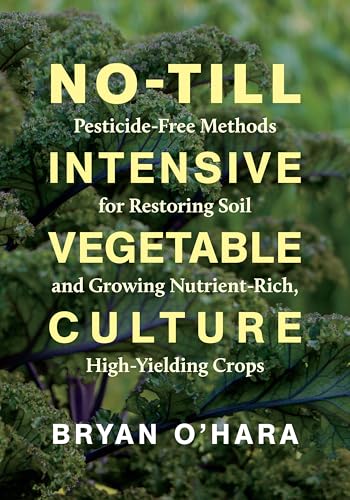
No-Till Intensive Vegetable Culture: Pesticide-Free Methods for Restoring Soil and Growing Nutrient-Rich, High-Yielding Crops
Overview
From a veteran organic grower: a unique agricultural methodology that delivers higher yields, higher quality, and higher profitability--absolutely free of herbicides or pesticides
Farmers are rapidly adopting no-till techniques for the extensive benefits they provide by enhancing soil biological functions. The diverse, balanced soil environment in no-till beds and fields provides growing conditions for vibrantly healthy plants and bolsters crop and farm ecosystem resilience in the face of climate challenges and declining air and water quality.
In No-Till Intensive Vegetable Culture, renowned grower Bryan O'Hara describes the multi-year process of transitioning his Connecticut vegetable farm to a no-till system. O'Hara uses absolutely no herbicides or other pesticides on his farm, and he asserts that this flexible, nature-friendly agricultural methodology is critical in maintaining the health of the soil and the farm ecosystem as well as for economic success. The methods developed at Tobacco Road Farm, now also in use on other farms in O'Hara's region, have shown stunning results in yields, quality, and profitability.
O'Hara delves into all facets of a holistic growing system perfected over 25 years of farming, including no-till bed preparation techniques, seeding and transplanting methods, irrigation, use of fertilizers (including foliar feeds), compost preparation and application, culture of indigenous microorganisms to support soil biology, reduced tillage systems, pest and disease management, weed control, season extension, and harvest and storage techniques. O'Hara also explores the spiritual dimension of managing a farm ecosystem: the importance of observing the natural balance between plants, soil, air, water, and sunlight and the ways in which working to maintain that balance influences practical production decisions such as when to plant, water, and fertilize a crop.
O'Hara's goal is to pass on his knowledge to those who feel the impulse to make their livelihood in harmony with nature. His techniques require a relatively small land base of a few acres or less and little capital investment in equipment. Because of this, home gardeners and homesteaders also find value in his methods. This manual provides growers with advanced techniques and insights not available in any other single book on vegetable production, a unique methodology that will allow them to continue to adapt to meet future challenges.
Farmers are rapidly adopting no-till techniques for the extensive benefits they provide by enhancing soil biological functions. The diverse, balanced soil environment in no-till beds and fields provides growing conditions for vibrantly healthy plants and bolsters crop and farm ecosystem resilience in the face of climate challenges and declining air and water quality.
In No-Till Intensive Vegetable Culture, renowned grower Bryan O'Hara describes the multi-year process of transitioning his Connecticut vegetable farm to a no-till system. O'Hara uses absolutely no herbicides or other pesticides on his farm, and he asserts that this flexible, nature-friendly agricultural methodology is critical in maintaining the health of the soil and the farm ecosystem as well as for economic success. The methods developed at Tobacco Road Farm, now also in use on other farms in O'Hara's region, have shown stunning results in yields, quality, and profitability.
O'Hara delves into all facets of a holistic growing system perfected over 25 years of farming, including no-till bed preparation techniques, seeding and transplanting methods, irrigation, use of fertilizers (including foliar feeds), compost preparation and application, culture of indigenous microorganisms to support soil biology, reduced tillage systems, pest and disease management, weed control, season extension, and harvest and storage techniques. O'Hara also explores the spiritual dimension of managing a farm ecosystem: the importance of observing the natural balance between plants, soil, air, water, and sunlight and the ways in which working to maintain that balance influences practical production decisions such as when to plant, water, and fertilize a crop.
O'Hara's goal is to pass on his knowledge to those who feel the impulse to make their livelihood in harmony with nature. His techniques require a relatively small land base of a few acres or less and little capital investment in equipment. Because of this, home gardeners and homesteaders also find value in his methods. This manual provides growers with advanced techniques and insights not available in any other single book on vegetable production, a unique methodology that will allow them to continue to adapt to meet future challenges.
Finding high-quality digital editions shouldn't be a challenge. With instant access to our curated library, you can start your journey with Aftermath immediately. Whether on your phone, tablet, or e-reader, the story of Raleigh's life is presented in a format designed for modern readers.
To get started finding No-Till Intensive Vegetable Culture: Pesticide-Free Methods for Restoring Soil and Growing Nutrient-Rich, High-Yielding Crops, you are right to find our website which has a comprehensive collection of titles listed. Our library is one of the most comprehensive resources for free digital reading materials, providing verified and safe content for book lovers worldwide.


36,114 currently reading


152,889 want to read
Sponsored
Sponsored
Book details & editions
| ISBN | 1603588531 |
| Publisher | N/A |
| Publication date | N/A |
| Language | English |
| Pages | pages |
| Reading Options | PDF · EPUB · Mobi |
Sponsored
Sponsored





Ratings & Reviews
5 ★
81.4%
4 ★
14.6%
3 ★
3%
2 ★
0.6%
1 ★
0.4%
4.76
BlueReads Choice
Sponsored
Write a Review
Community Reviews
Sort by: